Written by: Dr Gavin Sacks, MA PhD FRCOG FRANZCOG CCST, Group Medical Director and Fertility Specialist at Genea.
Last reviewed: October 2026
Dr Sacks has over 20 years of experience in reproductive medicine and holds a PhD in reproductive immunology from the University of Oxford. View Dr Sacks’ Genea profile.
If you have been through IVF cycles that have not worked, or pregnancies that have not continued, and all your standard tests have come back normal, I understand how frustrating that is. NK cells are part of the answer for some of my patients. They are immune cells that usually protect you from infection, but inside the uterus, they take on a completely different job of helping an embryo implant. If there are too many of them, or they are too active, they may make it harder for a pregnancy to take hold. This is something I have spent over 20 years researching, and it is why I test for it in patients who have been through repeated loss or failure without an explanation.
I want this article to answer all the general questions you might have about NK cells in clear language, so you leave it properly informed. I have set it out as a series of questions, the ones I am asked most often in consultations. Let’s go through them together.
Here is something I find truly fascinating, and I think every patient should understand it, because it explains everything that follows. An embryo is, immunologically speaking, a foreign object. Half of its genetic material comes from the father. In any other context, your immune system would recognise that as foreign and act against it.
A successful pregnancy depends on your immune system doing something remarkable: allowing that foreign tissue to implant and grow, rather than rejecting it. Early in my career, this was the question that drew me in.
My research began in pre-eclampsia, a pregnancy complication involving high blood pressure, but I became increasingly interested in what happens at implantation itself. What I found changed how we understand pregnancy. It was long believed that pregnancy is an immune-suppressed state.
My research showed the opposite: pregnancy is actually an inflammatory state, and NK cells are a large part of creating that inflammation.
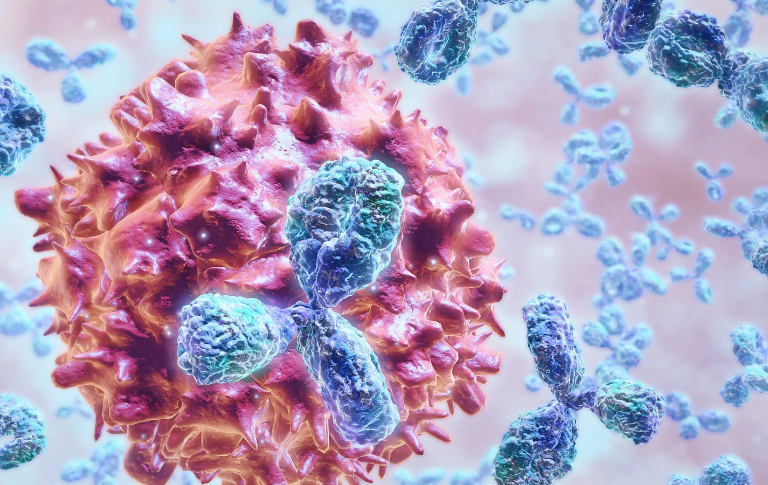
NK cells are a type of white blood cell and a core part of your immune system. Their main job, in most parts of your body, is to identify and remove cells that do not belong there. This includes viruses, bacterial cells, and cells that are multiplying abnormally. In this sense, NK cells are one of your body’s first lines of defence. What surprises most patients is that NK cells behave completely differently once you are pregnant.
Inside the uterus, rather than attacking anything, NK cells become the most common immune cell present at the site where the embryo implants. Their role there is not to defend, it is to help build the environment a pregnancy needs to establish itself. In a healthy pregnancy, the inflammation that NK cells help create is a good thing. It supports the embryo as it implants into the wall of the uterus and helps establish the environment a growing pregnancy needs. This is a normal, necessary process.
The difficulty comes when this response goes too far. In some women, NK cell numbers or activity in the uterus become excessive. When this happens, the inflammatory environment can tip from supportive to unwelcoming, and this may prevent a fertilised egg from implanting successfully, or contribute to pregnancy loss once implantation has occurred.
Research has found that high numbers of activated NK cell levels are present in 15 to 25% of women experiencing repeated unsuccessful IVF cycles or recurrent miscarriage.
That means for roughly one in five to one in four of my patients in this situation, an overactive immune response involving NK cells could be part of the picture. It does not mean it is the whole picture, and it is not the answer for everyone, but it is a factor worth investigating properly.
Many cases of miscarriage and unsuccessful IVF relate to problems with the embryo itself, rather than a patient’s immune system. When a couple has been through repeated miscarriage, or several unsuccessful IVF cycles, I test for other explanations first, like genetic factors in either partner, problems with the uterus, hormonal imbalances, antibody or blood clotting conditions, and sperm quality. It is when those tests come back normal, and we are still without an answer, that I turn to the immune system.
This is one of the more reassuring parts of the process. Testing NK cell numbers and activity is done through a simple blood test, taken from the female partner. I have been involved in bringing this test to Australia, based on the work I did during my PhD in reproductive immunology at Oxford, and I continue to refine it through ongoing research.
I generally recommend this test to patients who have experienced recurrent miscarriage, repeated implantation failure during IVF, or unexplained infertility once other causes have been reasonably excluded. It is not a first-line test for every new patient, because for most people, the answer lies elsewhere. But if you have been through this journey without an explanation, it is well worth examining.
For women whose testing shows high NK cell activity, I developed a treatment called the Bondi Protocol, based on my research into immune causes of recurrent miscarriage and repeated IVF failure. It is not a general fertility treatment, and I would not recommend it outside that context.
The protocol combines two medications that are both common, inexpensive, and well established in early pregnancy care: prednisolone, a corticosteroid, and Clexane (enoxaparin), a blood thinner. Together, they may help suppress an overactive immune response, creating a more receptive environment for implantation. Treatment is taken daily by injection, starting either at the beginning of an IVF cycle or as soon as a pregnancy is confirmed, and continues until at least the 12th week of pregnancy. Both medications require prescription by a qualified medical practitioner and are not suitable for every woman, which is why close monitoring by a fertility specialist matters throughout.
A recent study I conducted found that for women with high NK cell activity levels, live birth rates were over four times higher when the Bondi Protocol was used, at 2%, compared with standard protocols.1
I want to be honest about what this means and what it does not mean. These are meaningful results for a group of women who have often already faced years of unexplained loss and failure. But individual results vary, and the Bondi Protocol is a targeted intervention for a specific immune issue, not a guarantee for anyone who takes it.
Prednisolone and Clexane both have an established safety profile in early pregnancy, and I monitor every patient on this protocol closely. That said, no treatment is without risks.
I discuss all of this in detail with every patient before we begin, because informed decisions are the only decisions I am comfortable making with someone about their treatment.
Everything I have described so far – the Bondi Protocol, the blood test, the 15 to 25% figure – comes from research I have been building for over 20 years. But I do not think that means we have found all the answers. I think we are only just getting started.
I am currently leading a new study at Genea, which has received ethics approval, investigating whether NK cell numbers and activity in the blood can help predict IVF outcomes before an embryo is even transferred. We believe this will be the largest prognostic study of its kind conducted anywhere in the world.
Every fertility journey is different, and NK cells are only ever part of a much bigger picture that includes everything from your genetics, uterus and hormones to your partner’s sperm quality. Not everyone with implantation failure or pregnancy loss has elevated NK cell activity, and that is exactly why proper, comprehensive testing matters rather than assuming any single cause. If you have been through repeated IVF failure or recurrent miscarriage without an explanation, this is a conversation I would encourage you to have.
The study I am leading at Genea has already begun recruiting patients in Western Australia, with Sydney following shortly, as we work to build a much clearer, evidence-based picture of who NK cell testing genuinely helps. Even as we continue investigating and treating patients individually today, that larger body of evidence is being built in the background, and that gives me great hope for my patients’ future.
Request an appointment with Dr Gavin Sacks to discuss NK cell testing and whether it may be relevant to your fertility journey.
