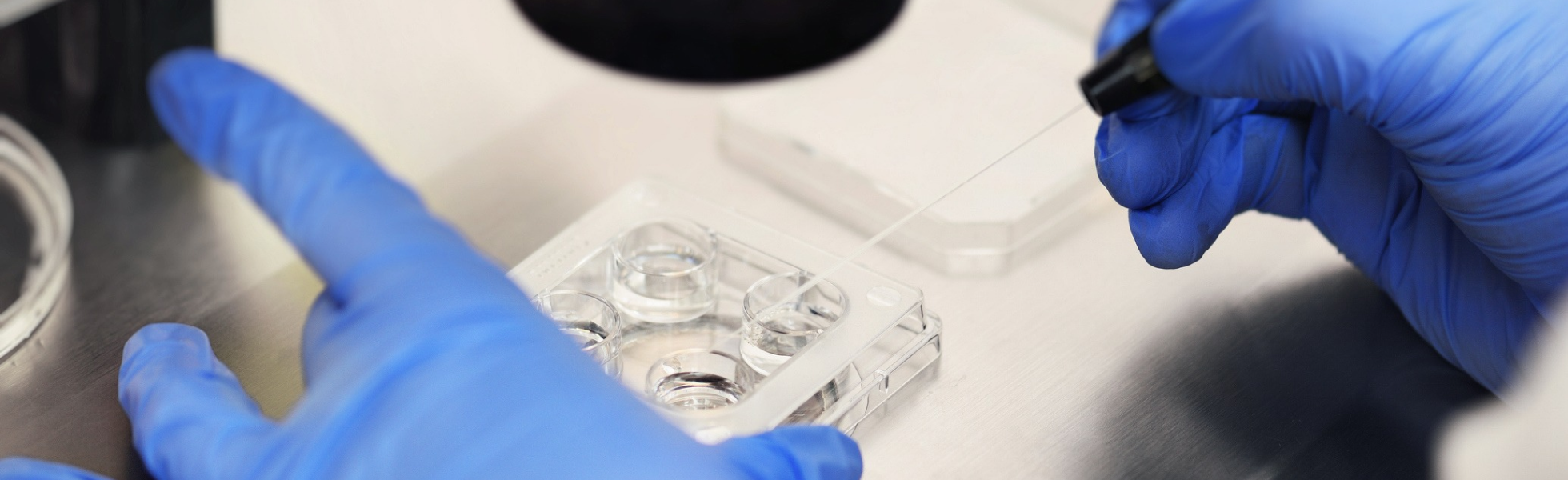
Standard IVF uses hormone injections to help eggs mature inside the body before collection. In vitro maturation (IVM) takes a different approach: eggs are collected while still immature, then matured in the laboratory, using far less hormone medication, and sometimes none at all.
Dr Gavin Sacks has worked closely with this technology since it was introduced to Australian fertility care, and will be offering it to suitable patients using Fertilo, a laboratory system developed by the US company Gameto.
What is IVM?
In a standard IVF cycle, the ovaries are stimulated with hormone medication over 10 to 14 days so eggs mature inside the body before collection (egg retrieval). IVM uses a much lighter stimulation protocol, and eggs are collected earlier, while still immature. Maturation then happens in the laboratory, before fertilisation.
For the right patient, this can mean fewer injections, a shorter stimulation window, and a lower chance of side effects such as ovarian hyperstimulation syndrome (OHSS), a complication of standard IVF stimulation.
Why I will be using Fertilo
Fertilo uses specialised support cells, grown from human stem cells, that closely resemble the natural cells (granulosa cells) that surround and nourish an egg as it matures inside the ovary. When immature eggs are placed in a dish with Fertilo cells, those cells provide similar support signals to help the eggs mature. Fertilo is never given to a patient directly. It never enters the body or comes into contact with an embryo, and is washed away before fertilisation.
“I’ve been working closely with this technology since it first came to Australia, and I’m interested in it because it gives some patients a genuinely different pathway, not just a gentler version of the same one. My job is to help you work out whether that pathway is right for you.” — Dr Gavin Sacks
Is IVM right for you?
IVM isn’t the right pathway for everyone. It may be worth discussing at your consultation if you:
Are seeking IVF or fertility preservation, and are aged between 18 and 45
Have polycystic ovarian syndrome (PCOS) or a high ovarian reserve
Have had a high number of immature eggs collected in a previous cycle
Would prefer to minimise the hormonal medication involved in your treatment
Dr Sacks will talk you through whether IVM fits your individual circumstances and goals, and what the realistic alternatives are.
What the process involves
A lighter stimulation protocol, typically lower-dose medication over a shorter period than standard IVF, with regular monitoring
Egg collection, performed in the usual way under light sedation. Mature eggs go straight to fertilisation; immature eggs are set aside for IVM
Laboratory maturation, where immature eggs spend around 24 to 30 hours with Fertilo cells before being assessed for maturity
Fertilisation and embryo development, using standard laboratory procedures
Frozen embryo transfer, scheduled in a later cycle. IVM cycles don’t include a fresh transfer, so the uterine lining and embryo are properly synchronised for the best chance of implantation
An honest picture
IVM has existed for some years, but laboratory maturation has historically been less effective than the maturation that happens naturally in the body, which has meant lower success rates overall compared with standard IVF. Fertilo is designed to narrow that gap, but the published experience is small and there is no direct comparison against conventional IVF, so we cannot yet tell you how the two perform side by side.
Because of this, IVM with Fertilo will be offered within a formal, ethics-approved program, so every patient receives full written information and their outcomes are carefully monitored. Dr Sacks will always give you a clear, honest picture of what to expect, including where the evidence is still developing.
Book a consultation
If you’d like to find out whether IVM could be part of your fertility journey, book a consultation with Dr Gavin Sacks at Bondi Junction or Sydney CBD.
In standard IVF, hormone medication is used to help eggs mature inside the body before they’re collected. In IVM, eggs are collected earlier, while still immature, and matured in the laboratory instead. This means less hormone medication overall, sometimes none at all.
Fertilo, the laboratory technology used, is never given to a patient directly. It only ever comes into contact with eggs in a laboratory dish and is washed away before fertilisation. IVM is offered within a formal, ethics-approved program, so every patient’s outcomes are carefully monitored.
IVM may suit you if you have PCOS, a high ovarian reserve, have had a lot of immature eggs collected in a previous cycle, or would prefer to minimise the hormonal medication involved in treatment. It isn’t right for everyone. Dr Sacks will assess your individual circumstances at consultation.
Laboratory maturation has historically been less effective than maturation that happens naturally in the body, which has meant lower success rates for IVM overall compared with standard IVF. Fertilo is designed to close that gap, but published data is still limited and there’s no head-to-head comparison with conventional IVF yet, so we can’t tell you how the two stack up against each other at this stage.
A lighter stimulation protocol, egg collection under light sedation, laboratory maturation of immature eggs over roughly 24 to 30 hours, fertilisation, and a frozen embryo transfer in a later cycle. IVM cycles don’t include a fresh transfer.
Speak with Dr Gavin Sacks
Consultations are available at Bondi Junction and Sydney CBD.