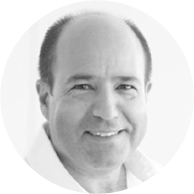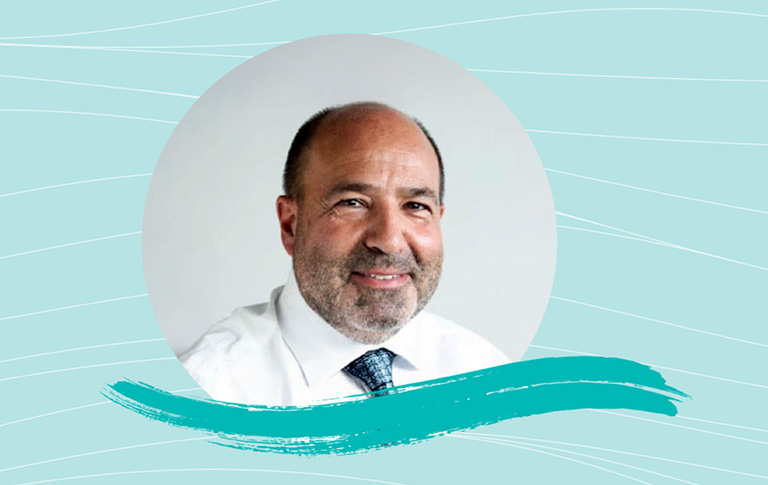

Dr Sacks’ interest in fertility care was first sparked in 1984 by an unlikely source – a question on the Cambridge University entrance examination: ‘What do you think is the future of in vitro fertilisation?’
Over time, this interest transformed into a passion for providing specialist fertility care to people who dream of having a baby. This passion stayed with Dr Sacks throughout his medical training at Cambridge and Oxford Universities and ultimately led him to become one of Australia’s leading fertility specialists.
Now based in Sydney, Dr Sacks has over 20 years’ experience managing a wide range of fertility problems. He has a special interest in challenging cases and providing second opinions in the setting of repeated unsuccessful IVF cycles.
Dedicated to remaining at the forefront of fertility science, Dr Sacks conducted ground breaking research into the role of high NK cell (a type of white blood cell) activity in women experiencing recurrent miscarriage and a poor response to IVF treatment. This research led him to develop an immune therapy known as The Bondi Protocol.
Dr Sacks completed his specialist training in obstetrics and gynaecology at the world-renowned Hammersmith Hospital in London. He has the UK equivalent of the highest-recognised qualification an Australian fertility specialist can have – the Certificate in Reproductive Endocrinology and Infertility (CREI). Only 5% of specialists in Australia hold this qualification.
With a PhD in reproductive immunology from the University of Oxford, Dr Sacks has been awarded several multi-million dollar grants to continue this research. This work ultimately became the basis for developing NK cell testing and The Bondi Protocol in Australia. He is one of the very few fertility specialists in Australia with a PhD in reproductive immunology.
In addition to his private practice at Flow Fertility, Dr Sacks is a visiting medical officer at St George Hospital in Sydney, a conjoint associate professor at the University of New South Wales (UNSW), and visiting professor at the University of Technology Sydney (UTS). He supervises research projects in the areas of NK cells, recurrent miscarriage, IVF protocols, and genomic (genetic) screening. He is also involved in studies exploring novel methods of sperm assessment and selection, as well as new methods for the long-term frozen storage of embryos, sperm and eggs.
Dr Sacks is a past associate editor of both Human Reproduction and Human Reproduction Update, the premier medical journals for the field of reproductive medicine. He is also an examiner at UNSW, and a past examiner at The Royal Australian and New Zealand College of Obstetricians and Gynaecologists (RANZCOG).
Also a qualified obstetrician, Dr Sacks practised obstetrics until 2015 and has delivered thousands of babies. For the last 10 years, he has narrowed his specialty practice to gynaecology and fertility care only to allow greater focus on his passion – helping patients who are struggling to conceive to fall pregnant.
When he’s not at work, Dr Sacks loves spending time with his wife and three children, ocean swimming (at Bondi of course!) and playing his guitar.
Through this partnership, Flow Fertility patients have access to Genea’s world-leading technology and laboratory science, and also benefit from Genea’s ongoing research programs.
Dr Sacks works with Genea, one of Australia’s most established fertility providers, with over four decades of experience and success rates above the national average. As Group Medical Director at Genea, Dr Sacks plays a leading role in shaping the clinical standards and research direction across the group’s network of 50+ specialists.
A practice name with meaning
Dr Sacks’ chose to name his fertility practice Flow for a number of reasons.
The clinic’s name partly derives from a laboratory technique called ‘flow cytometry’. This technology enables the precise identification and classification of immune cell populations, including NK cells. Flow cytometry was the basis of Dr Sacks’ PhD in reproductive immunology, and is now the technology used for the famous ‘NK activity’ test. This blood test identifies whether a woman may be a suitable candidate for The Bondi Protocol, an immune therapy pioneered by Dr Sacks for use during fertility treatment in women with high NK cell activity.
Beyond this technical association, Flow also represents Dr Sacks’ love of the ocean, his home base at Bondi, and the approach he takes to managing patients: “We go on a journey together, and my role is to try to steer you in the best direction, given all the information and techniques we have at our disposal.”